
The Hiring Process Is Broken, and We All Know It
And why we pretend it works anyway

The interview and hiring process at every company I’ve ever seen is broken. Not “needs improvement” broken. Not “could use some tweaking” broken. Fundamentally, structurally, almost impressively broken. And the reason is simple: nobody is doing actual fact-finding. Companies use methods, tools, and questions to screen candidates that have zero connection to evaluating whether someone can do the job. They’re just going through motions that look professional.
As someone who is focused on capability and enablement, I think it comes down to three primary failure points.
First, interview questions don’t link to actual competencies. Someone applying for a software engineering role gets asked “Where do you see yourself in five years?” as if their ability to generate corporate-speak about career trajectories has anything to do with whether they can debug code. A marketing candidate gets the classic “What’s your greatest weakness?” question, which measures exactly one thing: their ability to recite the same humble-brag everyone learned from the same internet article.
Second—and this is where it gets truly baffling—even when companies stumble upon profoundly competent or overqualified candidates, they don’t hire them. I’ve watched hiring managers reject someone with a decade of relevant experience because they “seemed overqualified” or “might get bored.” Imagine any other scenario where you’re offered something better than you expected and you say, “No thanks, this is too good.” You’d sound insane. But in hiring? Standard practice.
Third, there’s no system at all. It’s broken at every level. The job description was written by someone who doesn’t do the job. The recruiter screens for keywords they don’t understand. The hiring manager asks questions they Googled the night before. The team interview is just vibes. The final decision often comes down to whether someone “felt like a culture fit,” which is code for “reminded us of ourselves.” This isn’t a process. It’s improv theater where everyone’s pretending they have a script.
The outcomes from this are absurd and reach performance art levels when you look closely. Companies will reject 200 qualified candidates, then complain they “can’t find talent.” They’ll require five rounds of interviews for an entry-level position, as if they’re hiring the Secretary of Defense. They’ll ask candidates to complete unpaid “sample projects” that coincidentally look exactly like actual work the company needs done. They’ll make someone interview with twelve different people who all ask the same three questions, then take eight weeks to decide, then offer below-market salary because “we’re a family here.”
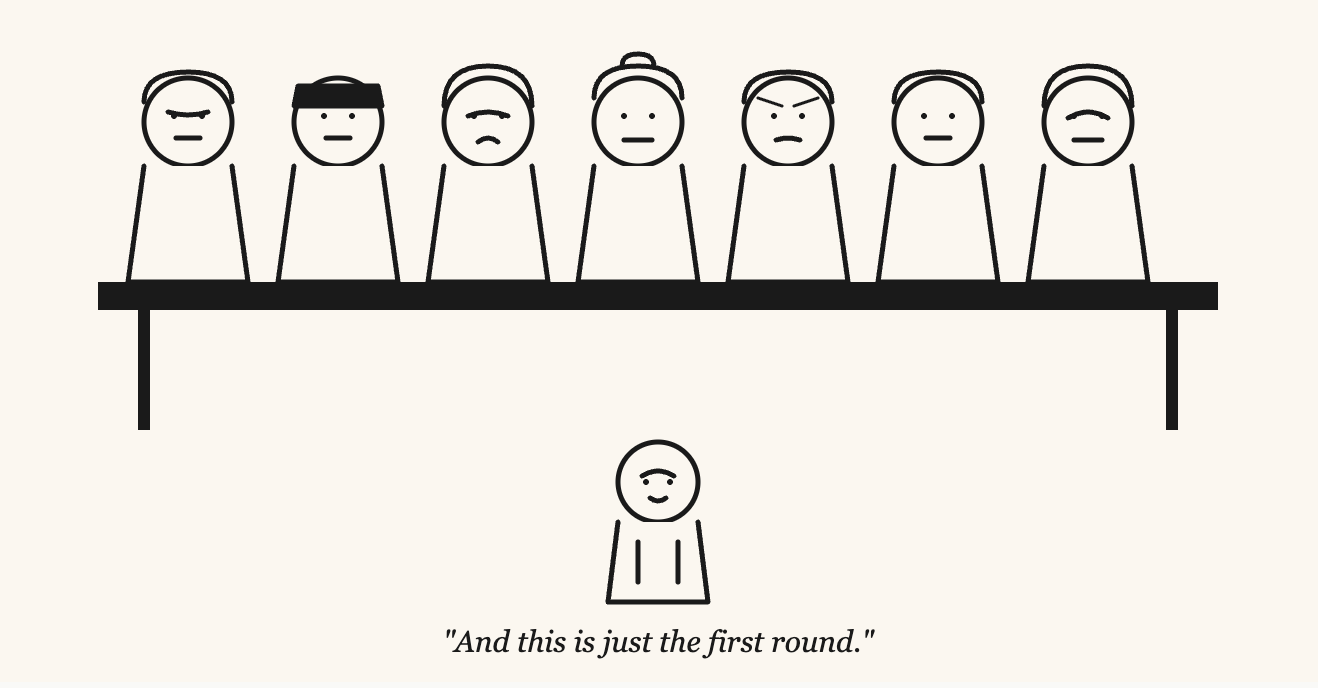
It don’t make no damn sense.
So why does it continue? Because fixing it would require admitting the system is broken. It would mean the VP of Talent Acquisition would have to say, “We’ve been doing this wrong for years.” It would mean HR would need to rebuild processes from scratch instead of copying what everyone else does. It’s easier to keep running the broken system and blame “the talent pool” when it doesn’t work.
Hiring will stay broken until someone with power is willing to say what everyone in the process already knows: this isn’t measuring what we think it measures. We’re not finding talent. We’re filtering for people who interview well.
The looking is the work. Someone has to be willing to do it.